Fresh Seaweed Suppliers, Seaweed Producers, Wasabi Seaweed, Frozen Seaweed, Seaweed Benefit

What is The Use of Seaweed for Human in Different Aspect?

You might question about what is the use of seaweed since this sea plant is not very common for you to have every day. Some of you might not ever saw the seaweed in its natural habitat since this plant is different from other plant which grows in land. The seaweed is actually grows in the sea, this is why the plant is also known as sea vegetable. The plant itself contains many kinds of nutrition which proven to the beneficial for human in a lot of ways. This is why; there are a lot of seaweed usages that you should know.

What is the use of seaweed and its benefits for human?
1.      Human food
The most common answer to the question about what is the use of seaweed is that this sea vegetable is useful as human food. This sea plant has many kinds of nutrition inside, which also known to be beneficial for human. That is why many people from different countries have consumed it as human food. Of course they also create different kinds of seaweed dishes as variation so they can consume it in different ways. But the most common seaweed food that you may already know is as sushi in Japan which you can easily found on Japanese restaurant. You may also found it as gimbap which sold on many Korean restaurants. Or you may also have heard about laver bread which is a common dish in the Wales.
2.      Cosmetic
What is the use of seaweed beyond consuming as food? As the nutrition inside the seaweed is beneficial for human, then people also try to use it in different ways beyond consuming it as food. You may already know that seaweed is often extracted then used inside cosmetic product. The reason is because the nutrition inside the seaweed is found to be beneficial for human skin, thus using it as cosmetic is a practice that has been done by many beautician and cosmetician. This usage of seaweed is actually pretty new, thus there are many other method that people in beauty industry can do to exploit the benefits of seaweed for human skin.
3.      Fertilizer
Turns out the nutrition inside the seaweed are not only useful for human but it is equally useful for other plant as well. This is why many industries try to use this seaweed as fertilizer for their crops to make it grows better by absorbing the nutrition inside the seaweed. Of course, this fertilizer is different from other fertilizer that can be mixed with heavy soil to fertilize it. The fertilizer which is made using seaweed is only use on light soil and spread lightly on the surface so the plant can absorb it easier and make it grow better.
4.      Medicine
What is the use of seaweed on human health? You should know that the nutrition inside the seaweed also promote human health. Thus it is actually very common to use seaweed as medicine. In Chinese medicine this practice is already done since thousands of years ago. However, in western country the usage of seaweed in medicine had only start recently. Nevertheless, the claims that the medicine which contains seaweed is able to cure many kinds of disease keep getting popular. Some of the diseases which is known to be treated with this medicine are influenza, tuberculosis, colds, arthritis and many others.
5.      Industrial gum
Because of the seaweed properties, this vegetable is often extracted to be used as industrial gum. This item itself is then used in many kinds of product to create many levels of viscosity that the industrial product has to have. There are three types of industrial gum or seaweed hydrocolloids that can be extracted from different type of seaweed which are agar, carrageenan and alginates. That industrial gum has unique viscosity and gelling which cannot be mimic using other type of industrial gum. That is why the usage of seaweed as this product is very important and cannot be replaced by other things.
Those are some the answer to your question about what is the use of seaweed, not that you already get those information, you should not doubt the benefits that this sea plant has. Furthermore you may also want to use it in the future.


Seaweed Uses in Agriculture and Home Garden

Seaweed uses in agriculture to promote not only healthy growth but also to prevent diseases and pests so the quality of the products improved. Agriculture fertilizer can be made from seaweed extract which bring up important nutrients for the plants. In fact the use of seaweed has been conducted long ago since Roman times and the scientific benefits of using seaweed extracts for agriculture has been reported and reviewed already in the scientific publications. Anyway, seaweed extracts already delivering good improvement for the agriculture plants and their productivity and for further information; you can learn and understand more about seaweed uses in agriculture production below. 

About seaweed uses in agriculture and its nutrients for the plants
Reason to use seaweed extract
Why use seaweed as fertilizer or the soil? It is because soil or fertilizer is essential for the growth and a good soil ideally made from 50 percents of air and water plus 50 percents of solids and 90 percents of the solids should carry minerals while other 10 percents usually provide organic matters like decaying leaves. The crucial process in plant growth is that the space between the soils should allow the water and the air to reach the roots of the plants thus it can improve better quality of the products.
And the most important point is that plants which grow in the ocean waters rich in wide variety of minerals including selenium, iron, and cobalt. Ocean is not depleted of the minerals so the plants can absorb the minerals from the ocean waters about 50 to 60 percents including micronutrients. This quality alone becomes the major reason of why it is great to use seaweed as agriculture fertilizer or soil. For example, Japanese seaweed not only used for food source, but also seaweed uses in agriculture to make better products. The seaweed can particularly collect and accumulate the minerals from the ocean and then bring them into the fields.
Liquid seaweed extract
Liquid seaweed extracts made by manufacturing seaweed biomass with different methods. Liquid seaweed has been referred as plant tonic due to the high nutrients for plant growth. Seaweed will be collected from the ocean or the sea and nowadays, many types of liquid seaweed extracts can be purchased not only for agriculture but also for home garden. Many brands can be found from local seaweed products to imported products because seaweed uses in agriculture and home garden have been marketed commercially around the world.
Farm and home garden owners who live near coastal area love to harvest seaweeds on their own to use it as garden fertilizer. However, some countries have some rules regarding coastal environment protection and that’s why, if you want to harvest seaweed then it is better to check the rules before you harvest seaweed as the soil and follow the guides to protect the life of marine ecosystem. And when you want to harvest seaweed, take only what you need for the compost and because the sea vegetable is useful as a habitat for marine life and important erosion inhibitor, never harvest the seaweed from high tide line.
Composting seaweed for agriculture and home garden
There are many methods to use seaweed as fertilizer in both agriculture and homer garden besides purchasing seaweed extracts in the market. For example, you can directly composting seaweed into tea for the plants. Composting seaweed uses in agriculture and home garden as tea is one of the simple ways to give seaweed nutrition for the plant growth. To make compost tea, first you need to harvest some seaweed and then place handful of seaweed into a bucket and then fill with water or rain water. After that soak the seaweed in the water for 3 weeks straight for quicker time, although you can soak the seaweed from 3 weeks to a year. Do not forget to cover the bucket with loose lid.
The best thing about using compost tea made from the seaweed is that you can still reuse the fertilizer for several times with fresh water. Place the seaweed far from your house when you soak them since they tend to have very strong smell. If the liquid of the seaweed is too dark in color, you can dilute it by adding more water. Spray the liquid on the plants for the best seaweed uses in agriculture and home garden.


Seaweed Spinosum Health Benefits from the Product

Eucheuma seaweed spinosum belongs to the class of Rhodophyceae or red alga and it is first published by Burman with the name Fucus denticulatus Burma in 1768 while in 1822 the seaweed introduced as Sphaerococus isiformis by C.Agardh. In 1847, J. Agardh introduced the sea plant as Eucheuma J. Agardh. In aquaculture industry and market, Eucheuma spinosum is more popular than Eucheuma muricatum, although both of them known as one species of alga. Commercial farm of seaweed spinosum are located mainly in Indonesia, Philippines, Mozambique, Tanzania, and various other countries. Understand more about this type of seaweed by reading information below.

About seaweed spinosum cultivation and harvesting process
Under the right condition, farming and cultivation of eucheuma seaweed spinosum is really simple. Under commercial farm, they are grow easily especially when attached to ropes and each day the growth rates can reach about 3 to 8 percent and there are several cultivation methods available such as long lines, rafts, and off-bottom. The seaweed will be washed several times after harvested with sea water in order to remove sediments and after that the seaweed will be sun dried. The dried seaweed will be distributed to facilities or sold directly to traders who will send the seaweed to exporters or international producers.
Just like any other seaweeds, spinosum contains many nutrients that are very healing and can be used to treat certain diseases. Healthy benefits of seaweed spinosum including lowering the cholesterol levels, prevents and heals DNA damages, healing inflammation, and many more. In addition, seaweed is one of the simplest and easiest to digest as edible food source in the world, not to mention they can be possible low cost food for most of people.
Here are the health benefits of seaweed spinosum which give wonderful advantages for our body such as:
-          Anti-inflammatory, spinosum seaweed has good anti-inflammatory agents or properties and so it can be consumed to fight against several diseases and pains including swelling, arthritis, redness, and many more. In addition, the super seaweed can be eaten to treat kidney inflammation.
-          Lower cholesterol, spinosum seaweed can help to lower cholesterol thanks to the high level of soluble fiber found in the seaweed.
-          Support weight loss, because eucheuma contains lower calories it can be consumed for those who want to lose some weight as part of dietary menu plan. In addition, the protein and fiber in the seaweed helps to give full feeling for period of time and reduce appetite level.
-          Contains carrageenan, carrageenan is known to be a great natural food emulsifier and stabilizing agent in the form of seaweed flour. The flour can be used for various foods including cookies, yogurts, ice cream, custards, soy milk, cakes, nut milks, chocolate, and so on. The seaweed even can be used for various products such as lotions, toothpaste, creams, and shampoo.
-          Treat anemia, seaweed spinosum nutritional benefits like iron can support anemic healing process. The iron enhance red blood cell production and thus for those who suffer from anemia can start to eat seaweed so it can treat their condition or at least help to reduce anemic.
-          Fight against free radicals, spinosum seaweed provides enough antioxidant properties in order to fight against free radicals which can cause certain dangerous diseases including cancers. Moreover, 100 gram of eucheuma seaweed contains around 10 milligram of vitamin E making the seaweed a good source for powerful antioxidant.

-          Strengthen the bones, the seaweed contains mineral like calcium and magnesium which is beneficial for bones and teeth. It also brings phosphorus content to build stronger bones and in fact the seaweed spinosum provides 600 times more calcium than calcium found in animal sources.
Those are the benefits of seaweed spinosum which you can experience by consuming the seaweed in proper amount. To get your hands on these wonderful seaweed species while taking their healthy benefits, you can try to find seaweed suppliers or producers that can deliver you with high quality of spinosum seaweed.
This seaweed can be eaten as tasty vegetable salads or as part of other vegetarian’s dishes. You can try to google various seaweed spinosum recipes and start to make your own dishes to get the nutrition. You can also ask for local health food store to find this amazing product.


Seaweed Nutrition Iodine Recommended Usage Method Information

You might want to know more about seaweed nutrition iodine content as it is one of the content that is uniquely have by this sea vegetable. The seaweed is a plant which grows inside the sea that is why it naturally contains iodine. That is also why a lot of people getting recommendation to consumed seaweed to fulfill their daily iodine needs. Furthermore seaweed has other nutrition which is beneficial for human body. Nevertheless iodine is one of the largest nutrition content that seaweed has, which make it unique on its own. This is why you should be more informed about the iodine content inside the seaweed which you can make use of for your health.

Seaweed nutrition iodine information to learn
The iodine content inside seaweed is actually very large and there are many kinds of seaweed product that you can consume to get seaweed nutrition iodine. That is why; you can choose different type of seaweed product to consume in order to fulfill your daily iodine needs. The lowest iodine content can be found inside the nori seaweed product. One gram of this nori seaweed product contains around 12 microgram of iodine. That is why; you can easily fulfill your daily iodine need by consuming only 9 gram of this nori seaweed product.
But then the highest iodine content can be found inside the kombu seaweed. One gram of this kombu seaweed contains around 2660 microgram of iodine at the highest estimation. That is why: even when you only consume 9 gram of this kombu seaweed, you will already over consuming the daily iodine needs around 240 times. You should also know that tolerable highest limit of iodine consumption is as much as 800%.
Even though seaweed nutrition iodine is not actually lethal, and the toxicity of the iodine itself is still depended on the thyroid disorders. However, consuming very high iodine content in your food will suppress the thyroid function very strongly, and when it is done in long term then eventually it can develop into goiter.
Actually there are many kinds of seaweed that you can consume whether as a seaweed product or as it is. But the most common seaweed which consumed is the kombu seaweed, wakame seaweed as well as nori seaweed product. Among those seaweed which commonly consumed, the nori seaweed product is contains the least iodine, thus according to seaweed nutrition iodine it has the least risk on your health. For wakame seaweed, it contains higher iodine level, thus it is still alright to be consumed moderately, but consumption beyond 20 gram of this seaweed in a long time will eventually develop some issue you do not want to get. Furthermore, the kombu seaweed which contains very high iodine level, should be consumed cautiously since it has higher risk on developing the issue.
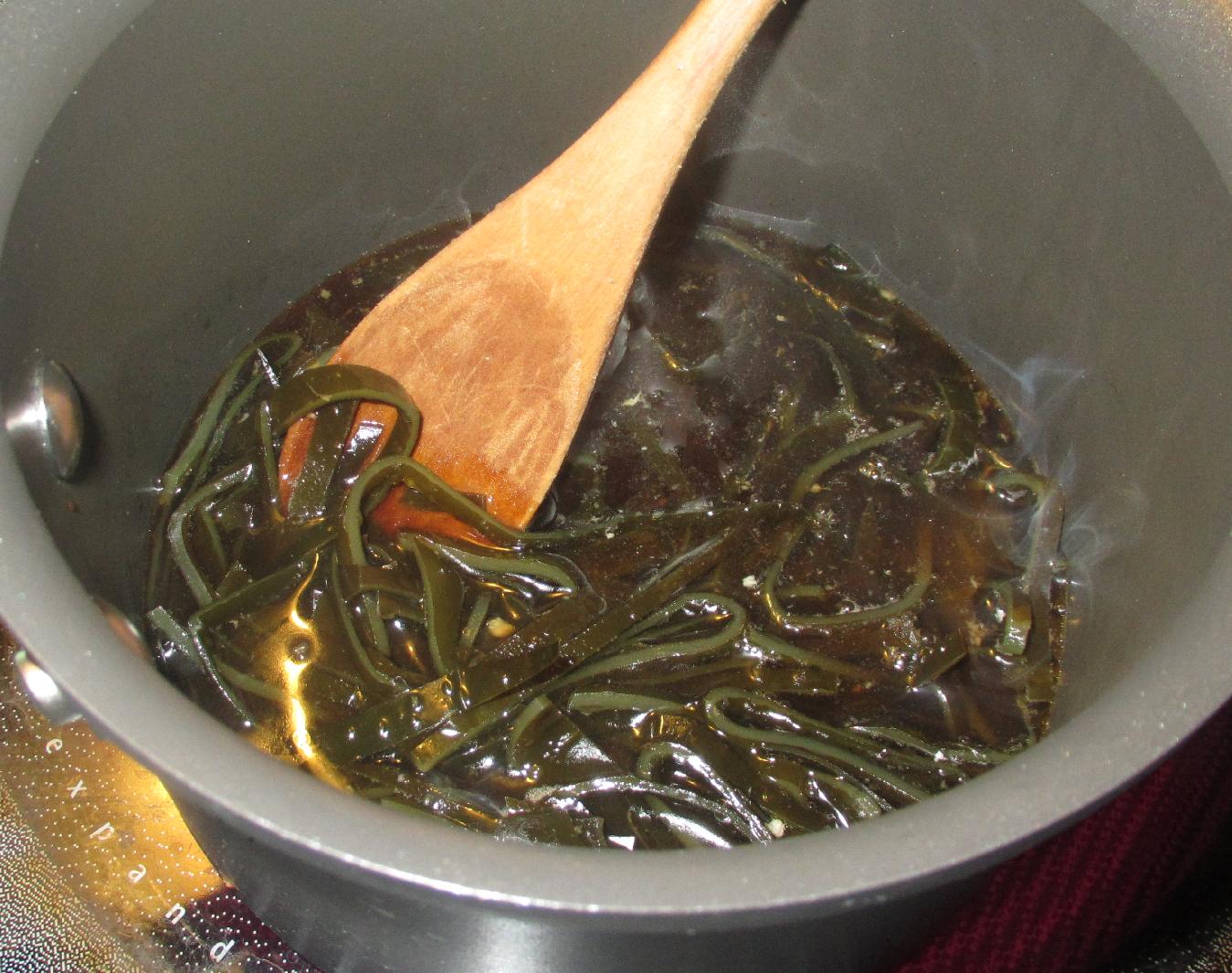
However, because of that seaweed nutrition iodine information that does not mean you should avoid consuming kombu all together since you can still consume it with the correct method. The method that you can use is the heating method which you can use to boil the seaweed for around 15 to 30 minute. With this method, the iodine content inside the seaweed will reduced significantly. The iodine will be released into the water as well as turn into gas since it is the iodine natural form.
Then by using this method will be able to remove around 99% of the iodine content inside the seaweed. Thus it will be safer for you to consume kombu using this method. Because there are high level of iodine content is lost from the heating method, then seaweed product which already being process or going through other cooking treatment, will not carry high amount of iodine content. But the same risk will still available in raw seaweed product such as kelp.
Some seaweed which originates from New England also contains arsenic which is very dangerous for your body. But using the same heating method will be able to remove the arsenic content inside the seaweed.
With that seaweed nutrition iodine information, you surely already know about the usage of this nutrition as well as the risk and how to avoid the risk all together. Now you can be relax and consume the seaweed easily after getting the correct information.


Seaweed Nutrition Facts with Beneficial Information

If you know several seaweed nutrition facts, then you will surely include this healthy sea vegetable in your meal. Especially since seaweed is known as a good source for several nutrition which available in high level inside this sea vegetable. Sadly not many westerners are eating enough amount of the seaweed since it is quite new food item in the western country. However, it has been consumed for thousands of years in the Asian countries since they already know about the nutrition facts that the seaweed has. That is why, they already earn the benefits from eating this sea vegetable.

Seaweed nutrition facts that you should know
Actually thousands kinds of seaweed are available in this world, however only tens of them are consumed by people. Some of the most common kinds of seaweed being consumed are the kombu and wakame which comes from brown type seaweed, as well as dulse and nori which comes from red type seaweed. And because of the rising popularity of this sea vegetable in the western country, it is often considered as the new kale which can be used with different kinds of dishes. This is why; you can often see this sea vegetable in many restaurants all over the world.
Seaweed nutrition facts common usage had actually started since 1500 bce where on Ebers Papyrus this sea vegetable is said to be used as natural cure for tumors. In Chinese traditional medicine, the seaweed is also used as remedies for many kinds of disease including infection on the urinary tract and goiter. Even in the current modern medical era, the usage of seaweed is still research since it shows huge potential in the medical usage. One example is on the finding of fucoidans which is a type of polysaccharide inside the seaweed which shows antiviral activity which can encourage the death of colon cancer cells in human. Furthermore a study in human shows that this sea vegetable is able to decrease the sugar absorption rate right after the consumption.
Different kinds of seaweed contains different amount of protein, and the red seaweed type has the highest amount among all. That can come up to around 50 gram for 3.5 ounce of red seaweed type. Furthermore, there are many kinds of vitamins inside this sea vegetable such as vitamin D, C, B and E. There is also carotenoids which is a type of vitamin A. the seaweed is a vegetable, thus it is the same as other vegetable that also contain vitamin K. Many kinds of minerals are also available inside the seaweed such as iron, calcium, copper, potassium and magnesium. Most unique mineral that all seaweed has is the iodine which is available in high level especially inside the brown seaweed type.
Other seaweed nutrition facts, that many people love is the fact that the seaweed contains high amount of fiber. Furthermore the fiber itself is the soluble fiber which is very useful to make you feel fuller in longer duration. This fiber is also useful to reduce the LDL cholesterol which is the bad for your body. On every 3.5 oz of dulse type of seaweed contains around 5 gram fiber which most of them are soluble, then on the kombu type of seaweed contains around 6 gram fiber which almost all of them are soluble.
A type of fiber inside the seaweed which is alginate is known to block the fat absorption on your digestive tract as well as useable on heartburn treatment. Furthermore this sea vegetable also contains different types of polysaccharides such as carrageenans, agar, and many others. Those substances are very usable as fiber as well as prebiotic that is very beneficial for the bacteria inside large intestine.
Even though the seaweed only contains very little fat, but a lot of seaweed contains high amount of omega 3 for both ALA as well as EPA type. While some of the seaweed also contains DHA. Furthermore seaweed also contains high amount of antioxidant in the form of vitamin E and C as well as phytochemicals in the form of fucoxanthin, and polyphenols which is some types of carotenoid.
With many seaweed nutrition facts that you already know from our information here, surely you want to add more seaweed in your meal to get the benefits.


The 5 Most Consumed Seaweed Japanese Products

Besides fish, seaweed Japanese becomes incredible vegetable products that distributed to various countries. For centuries, the sea plants provide numerous nutrients in the form of seaweed which can be consumed alone or mixed with other ingredients. Seaweeds can also being used for traditional medicine to cure certain diseases thanks to the high nutrition seaweed. Seaweed is not only healthy for our body, but they are also really tasty even for crispy snacks. For those who never normally adding seaweeds as part of diet then it is the time you start to consider eat seaweed for your dietary menu and experience the benefits! 

5 Most Consumed Seaweed Japanese Products
Here are five types of the most consumed seaweeds in Japan such as:
1.      Nori seaweed Japanese
Nori is probably the most famous Japanese seaweed products that sold worldwide. And although the type of the seaweed that mostly used to make the nori appears green, but in fact it is included in red algae species. The seaweed sometimes called layers and it is known commonly by its Japanese name in the form of thin-like paper and it is usually used to wrap onigiri/ rice balls or sushi rolls.
Since ancient times, Nori has been consumed by Japanese people, however it originally eaten as a kind of paste until Edo period in 1750s. The Japanese in the end using new way to process the seaweed paste with papermaking methods and thus the nori form that we used to know in modern days was made. You can even see nori is not only used to wrap sushi or rice balls, but also in soup dishes, sprinkle on top of dishes, and even sold alone as crispy snacks!
2.      Aonori seaweed Japanese
Although the name almost similar to nori seaweed which mentioned above, but the type of the seaweed used to make aonori (which means ‘blue nori’) is totally different from regular species used to make nori. Aonori that also known as laver in Wales and England and the laver bread being consumed regularly, but in Japan they are mostly used to add flavor in wide variety of dishes. Moreover, unlike in Wales that used aonori as a fried and paste, in Japan, aonori sold then purchased in the form of dried and powdered ingredient. Aonori being sprinkled to various dishes such as takoyaki, yakisoba, even as potato chips flavor.
3.      Konbu seaweed Japanese
It is edible sea kelp and although the appearance does not look like delicious nori seaweed, but in fact, they are mostly used to make soup or dashi. Moreover Konbu rich in umame, a glutamic acid, and this is why the seaweed used as the main ingredient to make soup stock because it can brings out the natural flavor of other ingredients. They are not only used to make soups, but also for sushi rice. Konbu usually being offered in a dried form; however you can also find it sold as pickled in vinegar. You maybe find that konbu taste chewy at first, but it still delicious to have! You can also find Japanese tea made from Konbu and sushi topping from this amazing seaweed.
4.      Hijiki seaweed Japanese
Hijiki is a type of seaweed that has been eaten for centuries by Japanese people. As a type of brown algae which grows wildly on coastal area, it usually sold in a dried form appears black in color. Hijiki usually consumed as side dish or eaten with vegetable and fish, it can also being added as extra flavor for sushi rice. Hijiki rich in vitamin B which provides good effect to promote lustrous and healthy black hair and this benefit has been used by Japanese people for centuries already.
5.      Wakame seaweed Japanese
Wakame is similar with Konbu because it is another type of sea kelp. It belongs to the brown algae although it appears with green color. Furthermore, in Japan, wakame is the third most popular seaweed products after nori and konbu of course. It is usually added to miso soup to add some flavor or eaten with fish and vegetables dishes. It can be mixed with salads and it extremely rich in folic acid, a type of vitamin B, that’s why wakame is good for pregnant women.
That’s several types of seaweed Japanese products mostly known sold in the market.


Seaweed Gracilaria for Agar-Agar Market

As the main ingredient to make agar-agar, seaweed gracilaria has an important role in the seaweed production of agar-agar. Gracilaria is a group of warm water seaweed and they can be found with wide range of species even more than one hundred. The first source of agar is Gelidium  from Japan till the beginning of the 20th century when the demand exceeded the supply of this alga and thus gracilaria is being used afterward. Agar-agar is extracted from these seaweeds and they can be found in coastal areas such as the shores, coral rubble, and abandoned nets, ropes as well as other objects left on the shore. More detailed information regarding this amazing seaweed species below.

Seaweed gracilaria for agar-agar ingredient
Seaweed gracilaria human use is mainly to produce agar-agar. The seaweed is harvested from either wildly method or seaweed farm while on the farm, they are grown on the ropes for commercial uses. Around 30,000 tons of gracilarian seaweed are produced each year and distributed around the world and about one third of this wonderful sea plant are come from South Africa while China is one of the first countries that cultivate gracilaria.
Agar-agar was known in both Japan and China for centuries, they are called as kanten by the Japanese while Chinese prefer called it as dongfen. Agar-agar used as flavored gel and sweetened. And it is said that the Chinese brought it to the South East Asian by the migrants and from that moment, dongfen called as agar-agar, a Malay name that even Chinese migrants used it. When the Europeans brought it to the Europe (via the Dutch), it was called as agar. Besides seaweed gracilaria, there are other seaweed species used to make agar-agar such as Gelidiella, Ahnfeltiopsis, Pterocladia, Gelidium, and Pterocladiella.
Gracilarian farming production method
There are four gracilarian cultivation and production methods which mostly used by seaweed farmers such as:
1.      Rope farming, gracilaria seaweed results in different amount or level of production depending on the species being cultivated and the climate conditions. The ropes used to cultivate and growing gracilaria seaweed can be nylon, monofilament, as well as other suitable lines. Before the ropes are used, they need to be checked especially the durability of the lines in seawater before the farmers purchase large amount of ropes.
2.      Pond farming
Cultivate seaweed in ponds have been conducted for centuries even till now. The seed stocks supplied from the wild and the ponds should be made in locations that are not exposed to the strong wind and near seawater or freshwater as the source to grow seaweeds. The water will be replaced after two to three days while the depth of the water maintained at 30-40 cm. Moreover, to make the seaweeds growing healthier and stronger, minerals like phosphates and nitrate can be added. Pond farming can produce around 34 tons per ha each year.
3.      Tank farming
To control the growth of gracilaria seaweed, tank farming can be used for the whole process. And this method promising more satisfying result due to the clean water control and if compared with other farming methods, it provides more productivity per unit area. And to maintain high level of productivity, gracilaria should be harvested periodically and the harvesting methods are varied depending on the size of the tanks being used. Some of the manufacturers using hand net to harvest the seaweed or the tank can be drained first into a net, although this method is less efficient due to a lot of time spend to refill the tanks with water.
4.      Bottom stocking
Bottom stocking cultivation process is conducted by move rocks bearing the thalli in order to increase the density on the farming area. And if the species of the seaweeds are already growing on a site, this method could be more successful. The disadvantages for having this cultivating method is that the cost of labor to plant and harvest are usually high and thus this can be economic for areas with low labor costs.
Seaweed gracilaria for agar-agar consists of three quality grades: standard agar, sugar reactive agar, and food grade agar. In decades, market demands for gracilaria have increased globally meaning that this kind of species really play an important role in marine industry product.


Seaweed Farming Information and Guides to Build Them

Seaweed farming is they way to cultivate and harvest the seaweed. It is a part of aquaculture and the farming has been regularly developed in many countries including China, Korea, Japan, and other Asian countries such as Indonesia and Malaysia. Seaweed has been treated as food source for centuries and used in many forms. Seaweed also comes in wide variety of types and grouped into three different colors which are brown seaweed, red seaweed, and green seaweed. Seaweed treated as export import commodity as well and most of them are exported to the both United States and Europe countries while some also find their way to Japan.

Do your own seaweed farming with these wonderful guides
But, the nicest thing is that you can even start your own seaweed farm in your own ground. Since there are hundreds of seaweed types, of course you should decide what kind of seaweed that you want to cultivate and harvest. Both Eucheuma striatum and Eucheuma spinosum are best suited for commercial farming, although the first one is more preferred because of the high tolerance of ecological changes and this species is easier to be farmed as well.
To be a productive seaweed farmer, you should maintain the farm really well and this is mean that you need to frequently visit then check the farms. Not to mention seaweed is need to be cleaned regularly to ensure good and healthy growth. Here is what you need to look for when you want to start seaweed farming.
1.      Choose the location. The most difficult task when you want to start farming seaweed is to decide and select the right location or site. But, you should pick a land with rapid water turnover or good water movement, however not heavy enough to damage the seaweed farm. Another important thing to look for is the water temperature, it should between 25°C and 30°C and the area need to be sheltered from strong winds and wave. Moreover, the ground should be stable so it is easy to install bamboos or stakes.
2.      After that you can conduct a test planting and there are two methods which can be used: Net method and Line method. With net method, you will be use polyethelene or monofilament net, while line method use polyethelene rope or knotted/ loop monofilament line.
3.      Do not forget to seek some permission to the Bureau of Fisheries and Aquatic Resources office after you finally find good seaweed farming location. Next, you should clean the site thoroughly by cut all the grasses, remove stones, rocks, and other obstacles. Do not forget to construct a farm house as well.
4.      Now you can start to make seaweed eucheuma farm and after you are done, you need to manage the farm regularly so you can harvest high quality seaweed products. Eucheuma seaweeds are harvestable when they reach 750 to 850 grams in weight. Allowing them to regenerate after you harvest the seaweed and this is also part of maintenance procedure.
5.      Drying the seaweed once you are done harvesting them. You need to prepare a platform to let the seaweed dry naturally. Please take a note that, avoid drying the seaweed directly on the soil so they are not contaminated.
Seaweed farming needs regular check up to keep the site in good condition. Some ways to maintain seaweed farms are:
-          Loose and unhealthy plants need to be removed.
-          Missing plants need to be replaced.
-          Remove dead corals, starfishes, sea urchins, and other obstacles which you found in the farm.
-          Any broken nets or lines should be replaced as soon as possible.
-          A boat maybe required depending on the distance of your seaweed farming site.
-          Never allow the sea vegetables to grow more than 5 kilograms since it will be destroyed by water current.
-          Make a record of the plants, for example daily harvest records, test plant records, expenses records, and many more.
How much you will earn from seaweed farming is not that bad and since seaweed farming considered being not so tough job, it is worth it to try. Even nowadays, many large companies and manufacturers built their own seaweed farms and distribute the products to various countries as seaweed commodities. Hope with above information you can tell how to seaweed farming on your own.


7 Types of Seaweed Edible Healthy to Be Consumed

There are many types of seaweed species which can safely being consumed and the seaweed edible comes with wide range of variety including nori, kombu, dulse, wakame, and many more. Seaweed has been eaten for centuries especially by Asian people such as Japan, Korea, China, and many more. They can be eaten alone or mixed into various dishes like seaweed based culinary tradition. But today, seaweed getting more and more popular and they are now can be found in major supermarket or groceries thanks to many seaweed suppliers and manufacturers which produce and then sold the seaweed products domestically and internationally. Seaweed becomes one of the healthiest foods consumed in the world.

7 types of seaweed edible to be eaten with healthy benefits
Various varieties of seaweed edible are available in many stores. You can found them in organic food store, Asian supermarket, or major groceries and they are good to be consumed as part of healthy diet and alternative ingredients to integrate diet menu plan including for vegetable salads, soups, high protein but low calories snacks, and many more.
In addition, seaweeds are rich in numerous nutrition including minerals, vitamins, and protein. This is why seaweed also produced as supplements and used for traditional and modern medicine to cure certain diseases or illnesses. You can find seaweed in the form of tablets, powders, and super food. Anyway, here are the short guides of seven type of seaweed with healthy benefits which you can harvest or buy then consumed:
1.      Nori seaweed
The first type of seaweed edible is nori and of course it is the best known seaweed variety of all. The nori seaweed is rich in beta carotene and the most famous product is seaweed layer which harvested and then reduced to pulp before being dried and cut into strips that appear like thin paper usually used to wrap sushi. The nori seaweed has really delicious taste and they are can be eaten straightly as crispy snacks with many healthy benefits including to improve digestive system, boost immune system, and many more. It is better if you choose original nori seaweed that made without extra ingredients but salt and oil.
2.      Kombu seaweed
Kombu seaweed edible specifically recommended for make into vegetable soups since they are really easy to be consumed. Kombu is also easier to digest and thanks to the natural salty flavor, you can use less cooking salt when making the soup.
3.      Dulse seaweed
Dulse is a red alga mostly found in Pacific or Atlantic Ocean and coastal, moreover they are typically harvested during low tide from early summer to the fall season. Just like other types of seaweed, the dulse is edible and contains high quality iodine, calcium, and protein. Dulse usually sold as dried seaweed and so they are needed to be soaked first before added into vegetable salads as fresh seaweed.
4.      Agar-agar seaweed
Agar-agar is also known as kanten used as gelatine-thickener and they are mainly mixed in vegan dishes. Agar-agar is a seaweed edible low in calories and mostly sold in the form of powder or flake. Agar-agar will not alter the flavor of your foods when used in the right amount, furthermore if you mix about 5 gram of agar-agar with 1 liter of hot water, it can turn into gelatine as it cools.
5.      Wakame seaweed
Wakame is similar with kombu but with milder flavor and wakame is mostly used in Japanese miso soup. Although wakame has milder flavor but when added to the vegetable soup, they can enhance the taste of the dish. You can also use wakame by toss them into crunchy cukes or as dressing.
6.      Hijiki seaweed
When dried, the hijiki seaweed edible looks a lot like dried tea leaves. However, once they are hydrates, they can grow larger even three times from the original size. They can be mixed into various dishes especially salad or tossed in a pan then fry with cider vinegar and sesame oil.
7.      Arame seaweed
It is dark brown Japanese kelp that appears as long strands and has mild sweet flavor. It is one of the most versatile seaweeds with a lot of nutrition contents just like any other types of seaweed.
Those are types of seaweed edible which really great to be consumed into various dishes.


Seaweed Dulse Nutritional Facts and Benefits

Seaweed dulse is a red alga that edible to be consumed and just like any other seaweed species such as nori and kelp, dulse provides numerous nutrients which useful for body health. Dulse is rich in minerals and protein; it is also high in fiber, antioxidants, omega 3 fatty acids, and vitamins. The red dulse appears like a leafy lettuce that grows wildly in the coastal area and mostly can be found in Pacific coast and northern Atlantic and they are typically harvested during low tide from early summer to the fall season. Learn more about this amazing seaweed plant and seaweed benefits below.

Seaweed dulse nutritional facts and benefits
Dulse can be used as traditional medicine such as to cure hangover, however it is really tasty to be mixed with other ingredients to make some dishes as well like for salads, soups, bread, desserts, chowders, and many more. In addition, it can be consumed straight out of the ocean and when dried it will be a great simple and healthy snack. You can even try to deep fry the dulse to make wonderful snack that tastier than potato crisps.
Nutritional facts
Dulse is really rich in protein, vitamins, minerals, and fiber. One of the most important vitamins which are provided by dulse is vitamin A to maintain healthy eyes. Moreover, when the dulse dried, it contains up to 30 percents of high quality fibre and 35 percents of protein. Minerals included in the dulses including iron, potassium, sodium, and so on that are essential for your body to function properly each day. Amazingly, for your information, 8 gram of dulse containing more iron than 100 gram of sirloin steak!
Here is the seaweed dulse nutrition contained in the red algae such as:
·         Proteins
·         Sodium
·         Calcium
·         Beta carotene
·         Iodine
·         Iron
·         Copper
·         Potassium
·         Manganese
·         Magnesium
·         Zinc
·         Vitamins (vitamin B1, B2, B3, B6,  B12, vitamin C, and vitamin E)

Seaweed dulse benefits
It is difficult to get fresh seaweed dulse unless you have an access and know someone who harvests them wildly. Once the dulse is harvested, they are completely dried to keep the freshness before they are packaged. You can find wide range of dulse products from certain grocery stories like dulse powder, dulse whole leaf, flaked dulse, seasoning mixes, and so on.
If you want to know more about dulse and its benefits then here is some list of the seaweed nutrient advantages provided by red dulse:
1.      Maintain strong bones
Just like we mentioned earlier that dulse contains some minerals which good to maintain strong bones such as calcium, iron, and magnesium. These minerals are also useful to protect strong tissues and joints. If you want to prevent osteoporosis then you sure need such food as part of your diet.
2.      Improve immune system
Dulse is also rich in vitamin C to help support white blood cell production as well as contribute to growth and repair. Vitamin C helps to boost immune system and to prevent many illnesses.
3.      Improve blood circulation
Just like other types of seaweed, dulse contains high amount of iron to support hemoglobin production in the body. Having seaweed dulse diet and consumed it properly will prevent anemia with its unpleasant symptoms.

4.      Improve digestion system
Due to the high amount of fiber contained in the dulse will help to improve digestion system. In addition, it is good to be eaten for those who suffer from diarrhea and constipation. The fiber will enhance the bowel movement and helps to reduce symptoms such as cramping and bloating.
5.      Maintain healthy eyes
Eating seaweed red dulse can help to maintain healthy eyes thanks to its vitamin A nutrition. Vitamin A acts as not only antioxidants which fight against free radicals, but it can also slowing down the development of cataract and to boost eye vision.
6.      Helps to lower blood pressure
Essential mineral in dulse such as potassium can help to lower blood pressure. This is means the potassium can also help to prevent certain issues such as heart attack, stroke, coronary heart, and many more.
There are still so many things that you need to know about the benefits of eating dulse like the iodine which helps to prevent thyroid problems and so on. By learning about seaweed red dulse, you basically know why you should eat seaweed dulse.


About Us

FRESH SEAWEED INDONESIA

We are Seaweed, Shrimp, Carrageenan, Tuna, Sardine, Mackerel, and Milkfish Suppliers in Indonesia. Ready to provide affordable price with the best quality. Contact us for reservations and Offer

: Java, Indonesia

: Indonesiatunafactory@gmail.com


Popular Posts

Contact Us